High-Performance Computing Center Stuttgart


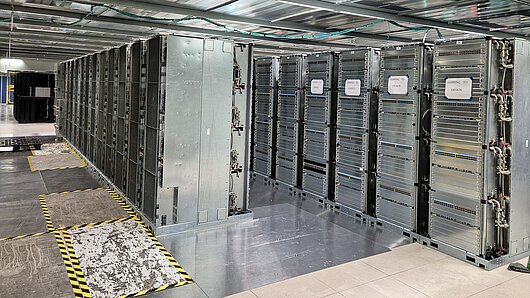
In an effort coordinated by HPE Financial Services, Hawk's hardware — including 4,096 computer nodes, 8,192 processors, and 65,536 memory modules — was carefully dismantled in several phases. Components were shipped to the company's refurbishing center in Erskine, Scotland, where data were securely erased and the hardware was tested for functionality. Following this audit, HPE was able to refurbish and sell more than 90% of Hawk's infrastructure, giving it a second life with several customers, including in the aerospace technology industry.
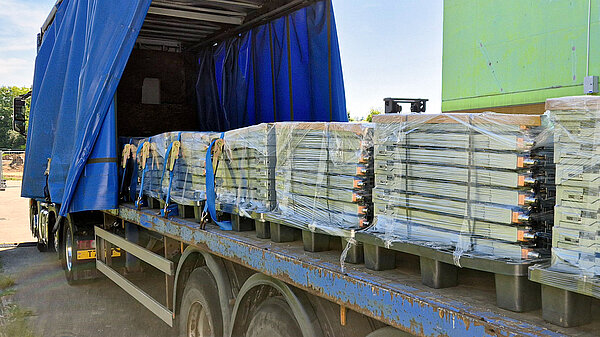
This approach had numerous environmental and economic benefits. According to HPE:
HPE reports that the proceeds from sales of the refurbished Hawk components were reinvested into operational services that will support the development of new and improved high-performance computing technologies. Including component refurbishing within a process of infrastructure life cycle management also provides a more environmentally and economically responsible approach to meeting hardware demands in the IT industry.
From Hawk to Hunter: Doubling Power, Cutting Energy, and Giving Tech a Second Life (HPE)
Funding for the HLRS's supercomputers is provided by the German Federal Ministry of Research, Technology and Space and the Baden-Württemberg Ministry for Science, Research and Arts through the Gauss Centre for Supercomputing.

A member of the Gauss Centre for Supercomputing, HLRS is one of three German national centers for high-performance computing.
