High-Performance Computing Center Stuttgart


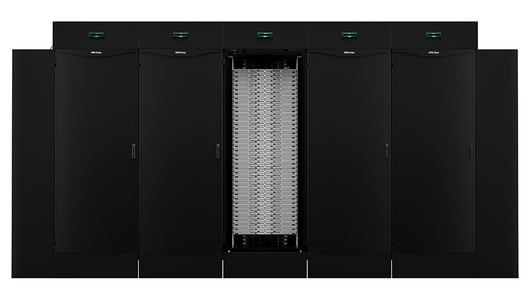
Scheduled to arrive in 2027, Herder is the upcoming flagship supercomputer of the High-Performance Computing Center Stuttgart (HLRS). Herder will support high-performance simulation as well as data-science approaches and artificial intelligence, including model training and generative AI. Bringing these capabilities together within a single system will also support converged computing workflows. HLRS anticipates that Herder's performance will be more than seven times that of the center's current supercomputer, Hunter.
The following key components are planned for Herder. More specific technical details will be published once they become available.
| Platform | HPE Cray GX5000 |
| GPU accelerator | AMD Instinct MI430X |
| CPU host | AMD EPYC Venice |
| Storage | HPE Cray Storage System E2000 |
| Networking | HPE Slingshot 400 |
| Cooling | 100% direct liquid cooling |
Herder will be installed in a new datacenter called HLRS III, which will provide the increased power and cooling requirements of Herder and is currently under construction at HLRS. HLRS III has been designed to incorporate sustainable materials, and will include solar panels for power generation.
A new energy facility is also being built beside HLRS III to process Herder's waste heat for reuse in the campus’ district heating network. The waste heat will be distributed to other buildings on the University of Stuttgart's Vaihingen campus. This will help reduce the University's heating costs and cover its process heat needs, making a significant contribution to its decarbonization efforts.
Funding for the Herder is provided by the German Federal Ministry of Research, Technology and Space through the Gauss Centre for Supercomputing, and the Baden-Württemberg Ministry for Science, Research and Arts.

A member of the Gauss Centre for Supercomputing, HLRS is one of three German national centers for high-performance computing.
