High-Performance Computing Center Stuttgart


In parallel, progress is being made on software development for new computing frameworks. These include programming models and libraries that would make it easier to use established codes with new hardware, and to implement heterogeneous workflows across multiple hardware types. Many anticipate that the development of hybrid approaches holds more potential for advancing HPC capabilities than expecting a single hardware type to replace all others, meaning that one goal for future HPC systems would be to integrate different hardware types and programming methods seamlessly. In this way, various elements within complex algorithms could then be distributed to specialized processors that run them most efficiently.
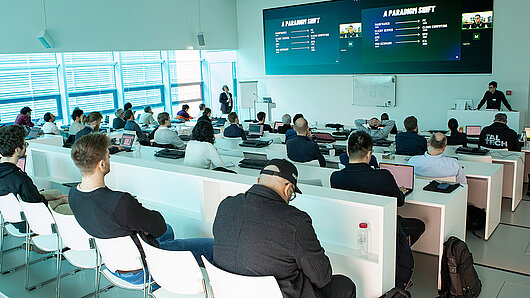
On March 16-17, 2026, the High-Performance Computing Center Stuttgart (HLRS) hosted its first Future Computing Workshop, an event designed to promote discussion, networking, and collaboration surrounding new computing paradigms. Hardware vendors, researchers, and computing facility operators offered in-depth looks at emerging technologies and methods, including the potential advantages they offer and the challenges they face in practice. By including perspectives from the academic research community, the event also enabled hardware vendors to gain insights into user requirements they will need to consider to ensure that their products are widely adopted.
Dr. Johannes Gebert organized the event, and leads HLRS's Future Computing Group. Launched in 2025, the Future Computing Group is developing partnerships with companies to test emerging computing technologies and to evaluate their relevance for HLRS's high-performance computing user community. The Future Computing Workshop was held to complement these efforts and promote the exchange of ideas across the community. "Computer scientists, domain-specific researchers, computing centers, and hardware vendors deal with widely different challenges and incentives," he explained. "We established the workshop as a platform for people to understand one another, accelerating the deployment of high-end computing paradigms."
The first day of the Future Computing Workshop focused on presentations by hardware vendors and technology developers, including NextSilicon, SpiNNcloud, AMD, Fraunhofer ITWM, OpenChip, Cerebras, Q.ANT, SiPearl, IQM, and Lightsolver. The presentations offered overviews of their technologies and case studies illustrating their capabilities. On the second day, researchers and representatives of academic HPC centers described progress in developing programming models, libraries, and performance tools for emerging hardware technologies. Academic participants included representatives of KAUST, TU Munich, the German Climate Research Center, the German Aerospace Center, EPCC, the Leibniz Supercomputing Centre, Jülich Supercomputing Centre, and Sandia Labs, as well as HLRS.
In addition to spotlighting innovations in hardware, the Future Computing Workshop illuminated challenges facing the HPC community resulting from a diversifying technology landscape. Existing research codes have often taken years to develop, and cannot easily be ported to new computing hardware, if at all. Because of the length of procurement cycles, HPC centers must also be able to plan for the future, requiring a clear understanding of what the user community will need in 5-7 years. As technologies evolve, it will be important that new hardware is well suited to the scientific problems that need to be solved, that the answers it delivers are reliable, and that it is easily programmable. Moreover, regardless of how fast new processing technologies become, the trend toward ever larger simulations and data-driven methods means that improving memory bandwidth capabilities will be at least as important. Otherwise, the ability to move and manage the resulting data efficiently could remain a major rate-limiting step.
These kinds of observations suggest that while new computing architectures hold great potential, they will be most successful if developed in partnership with potential users. The Future Computing Workshop aims to support this essential dialogue among stakeholders in order to facilitate the success of next-generation technologies.
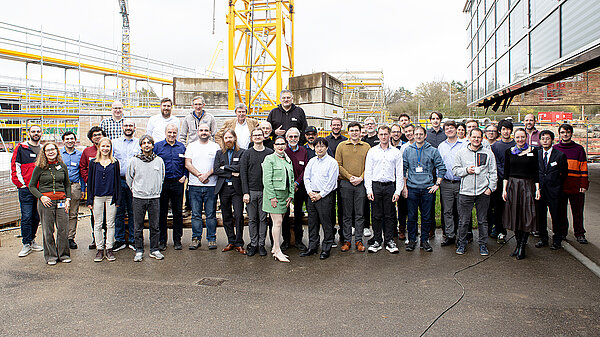
More than 65 participants attended the two-day Future Computing Workshop, contributing to many lively discussions. Considering the very positive response from across the hardware and research communities, HLRS intends to make the meeting an annual event. Details for the 2027 workshop will be posted as soon as they become available.
— Christopher Williams

A member of the Gauss Centre for Supercomputing, HLRS is one of three German national centers for high-performance computing.
